The Anikinaiya Ruling House
A story of resilience, Ijebu identity, and the complex intersection of tradition and colonial interference — told through the reign of the 49th Awujale of Ijebuland.
Home / History
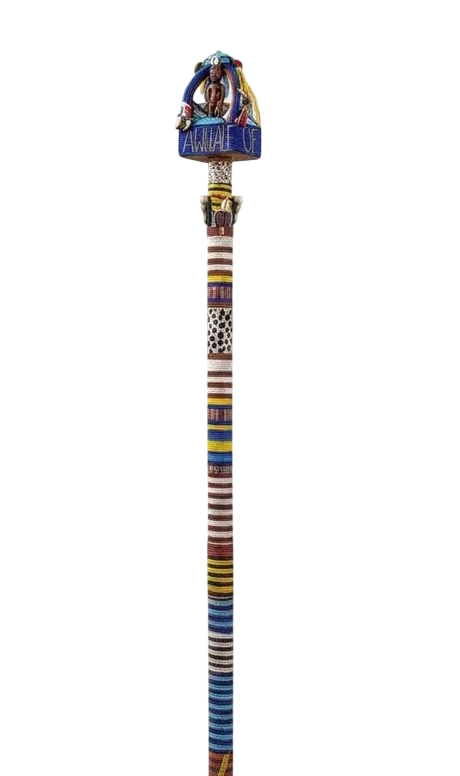
The turbulent journey
The autobiography of Oba Sikiru Adetona (Ọgbagba II), published by Mosuro Publishers in 2010 to commemorate his 50 years on the throne, gives a powerful account on pages 3–4 of the turbulent journey of Oba Ademolu Fesogbade — a son of Oba Anikilaya Figbajoye Agboogunsa (1821).
As referenced by Oba Sikiru Adetona, Oba Ademolu's accession to the throne came after the Odi's disqualified two candidates from the Tuwase ruling house due to ineligibility. However, his reign was cut short within eight months due to colonial interference and internal power struggles.
Through the intervention of influential figures — including Reverend Johnson — Oba Ademolu was reinstated in 1916, returning to the throne he had been forced to leave for Lagos. He went on to reign for nine more years until his passing in 1925.
This is more than a story of an Ijebu kingship tussle. It is a story of resilience, of Ijebu identity, and of the complex intersection of tradition and colonial interference.
On October 14, 1916, a letter was sent from Obun Eko Street, Lagos, addressed to His Excellency the Deputy for the Governor. Its authors were not ordinary citizens, but the most senior chiefs of Ijebu-Ode The Olisa, Aki, Apena, Agoon, Lapoekun, and Kakanfo. Their grievance was clear and urgent: the wrongful deposition of their constitutional ruler, Awujale Ademolu, and the unlawful imposition of Adekoya by colonial officials.
The chiefs declared Awujale Ademolu was guilty of no fault or crime, insisting that his summary removal violated ancient custom, tradition, and the entire history of Ijebu-Ode. Adekoya, they argued, had been handpicked solely by the Commissioner and District Officer, backed by policemen and prisoners rather than traditional rites an unprecedented spectacle in Ijebu land. They detailed multiple constitutional violations, Adekoya was not appointed by the traditional kingmakers (Odis, Lamuren, Oshugbo, Pampas, and the people), was not born after his father attained the throne, had a slave mother (disqualifying under custom), and suffered from a disqualifying physical malformation.
Beyond the illegitimacy of Adekoya's selection, the chiefs reported widespread harassment and intimidation. Adekoya and his supporters were penalizing loyalists who travelled to Lagos to protest, fining sympathizers and threatening severe punishment. Some individuals were forced to flee to Lagos for safety. The chiefs made it clear they would not compromise or accept Adekoya, seeking assurances that colonial officers would not force them to recognize or serve him upon their return.
In 1917 the Akarigbo of Remo's quest to wear a beaded crown without Awujale Oba Ademolu's approval hit a dead rock, with both parties deciding to annex all Remo lands with Ijebu-Ode. It was a declaration that they were not two separate nations, but one powerful entity.
However, the heart of the Akarigbo was eagerly with the beaded crown, as he desired a crown as a symbol of his own royal autonomy. In 1924 he sent emissaries south — not to the Awujale, but to the Ooni of Ife — to request a crown for himself. The Ooni, honouring the request, sent his own emissaries north with the crown.
As was customary, the emissaries stopped in Ijebu-Ode to pay homage to the paramount ruler of Ijebuland, the Awujale Ademolu. During their audience, they revealed the purpose of their journey.
Upon hearing this, the Awujale Oba Ademolu's expression hardened. A deep, cold anger filled the palace. The act was a challenge to his supreme authority, a breach of the sacred bond of 1917. He did not raise his voice, but his word was law. He promptly sent swift messengers to the Akarigbo, summoning him to the palace immediately.
The Akarigbo, fearing the wrath of the Awujale, arrived with haste. He was met not only by the Awujale's cold gaze but also by British officials, Messrs. H. D. Lamuth and T. B. Dew, the Counsel-General, who were there to calm the situation. They chastised the Akarigbo for his audacity, explaining the severe breach of protocol.
Appealing to the Awujale for patience and understanding, they managed to soothe the king's anger. The Ooni's emissaries were sent back to Ife with the crown, and a humbled Akarigbo was sent home to Remo to perform the appropriate rituals. He had been reminded that even a crown must come through the Awujale. The Awujale's power had been acknowledged, and the matter was settled for a time.
1915, 1917 – 1925
The Odi's disqualify two candidates from the Tuwase ruling house on grounds of ineligibility, clearing the path for Ademolu of the Anikinaiya house. Commissioner-to-District-Officer correspondence of 8 November 1915 survives in the National Archives (NAI, IjeProf. 3, File C.18/1915).
Alaayeluwa Ademolu is crowned Awujale of Ijebuland. The commemorative portrait held by the family records the date of the coronation.
Within eight months the reign is cut short by colonial interference and internal power struggles. The British official P. V. Young goes to the palace, removes Ademolu and announces Adekoya as his replacement. Ademolu leaves for Lagos.
The Ijebu chiefs intervene. Through influential figures including Reverend Johnson, Ademolu is restored to the throne he had been forced to leave. Scholarly sources date the reinstatement to January 1917.
The Akarigbo's quest for a beaded crown without the Awujale's approval fails; both parties agree to annex all Remo lands with Ijebu-Ode — a declaration of one powerful entity rather than two nations.
The Akarigbo petitions the Ooni of Ife directly for a crown. The emissaries stop in Ijebu-Ode; the Awujale summons the Akarigbo, and with British officials present the crown is returned to Ife. A District Officer assessment of Ademolu dated 19 September 1924 survives (NAI, IjeProf. 3, File C.20/1924).
The Colonial Report for Nigeria, 1925, records that Ademolu, the Awujale of Ijebu-Ode, died on 15 October 1925, that he had served the government loyally, and that Adenuga of the Tuwashe/Tunwase house was appointed as his successor.

The source text
Published by Mosuro Publishers in 2010 to commemorate fifty years on the throne, the autobiography of Alaiyeluwa Oba Sikiru Kayode Adetona (Ọgbagba II) devotes pages 3–4 to Oba Ademolu Fesogbade's accession.
Oba Adetona belonged to the same ruling house as Oba Ademolu — Anikinaiya — which gives his account particular weight within the family record. The passage sets out the disqualification of the two Tuwase candidates by the Odi's, the eight-month interruption of the reign, and the reinstatement that followed.
Rotation of the throne
Since 1959 the Awujale throne has officially rotated among four royal families. Oba Ademolu Fesogbade belonged to the second — Anikinaiya.
Reigned 1780–1790 and thereafter in rotation
The house of Oba Ademolu — and of Oba Adetona
Our HouseReigned 1790–1820 and thereafter in rotation
Reigned 1854–1885 and thereafter in rotation
1450 – 2025
Below is the complete list of all Awujales from the first to the most recent.
Showing all 54 Awujales
| No. | Name | Reign | Ruling House |
|---|---|---|---|
| 1 | Obanta | 1450–1465 | Gbelegbuwa |
| 2 | Obaguru | 1465–1475 | Anikinaiya |
| 3 | Munigbuwa | 1475–1480 | Fusengbuwa |
| 4 | Obanla | 1480–1490 | Gbelegbuwa |
| 5 | Obaloja | 1490–1502 | Anikinaiya |
| 6 | Obalofin | 1502–1516 | Fusengbuwa |
| 7 | Apasa | 1516–1528 | Gbelegbuwa |
| 8 | Obaganju | 1528–1536 | Anikinaiya |
| 9 | Tewogboye | 1536–1540 | Fusengbuwa |
| 10 | Obaruwa | 1540–1549 | Gbelegbuwa |
| 11 | Ofiran | 1549–1552 | Anikinaiya |
| 12 | Lapengbuwa | 1552–1557 | Gbelegbuwa |
| 13 | Otutubiosun | 1557–1560 | Fusengbuwa |
| 14 | Ajuwakale | 1560–1572 | Fusengbuwa |
| 15 | Gbadisa | 1572–1581 | Gbelegbuwa |
| 16 | Obajewo | 1581–1596 | Anikinaiya |
| 17 | Elewu Ileke | 1596–1610 | Fusengbuwa |
| 18 | Olumodan | 1610–1640 | Gbelegbuwa |
| 19 | Mase | 1640–1645 | Anikinaiya |
| 20 | Olutoyese | 1645–1655 | Fusengbuwa |
| 21 | Mola | 1655–1662 | Gbelegbuwa / Fidipote |
| 22 | Ajana | 1662–1664 | Gbelegbuwa |
| 23 | Ore-Yeye ♀ | 1664–1674 | Anikinaiya |
| 24 | Agunwaja | 1674–1680 | Gbelegbuwa |
| 25 | Jadiara | 1680–1695 | Fusengbuwa |
| 26 | Sapoku | 1695–1707 | Anikinaiya |
| 27 | Folajoye | 1707–1712 | Fidipote |
| 28 | Mekun | 1712–1722 | Fusengbuwa |
| 29 | Gbodogi | 1722–1730 | Anikinaiya |
| 30 | Ojigi Moyegeso | 1730–1745 | Fidipote |
| 31 | Boyejo | 1745 | Gbelegbuwa |
| 32 | Oniyewe | 1745–1750 | Fusengbuwa |
| 33 | Olope Oluyoruwa | 1750–1755 | Anikinaiya |
| 34 | Ayora | 1755–1765 | Gbelegbuwa |
| 35 | Fesojoye | 1765–1769 | Fusengbuwa |
| 36 | Ore-Geje ♀ | 1769–1770 | Anikinaiya |
| 37 | Sapenuwa Rubakoye | 1770–1775 | Anikinaiya |
| 38 | Orodudujoye | 1775–1778 | Gbelegbuwa |
| 39 | Tewogbuwa | 1778–1780 | Fusengbuwa |
| 40 | Gbelegbuwa | 1780–1790 | Gbelegbuwa |
| 41 | Fusengbuwa | 1790–1820 | Fusengbuwa |
| 42 | Setejoye | 1820–1821 | Fidipote |
| 43 | Anikilaya | 1821–1854 | Anikinaiya |
| 44 | Fidipote | 1854–1885 | Fidipote |
| 45 | Tunwase | 1886–1895 | Fusengbuwa |
| 46 | Adeleke | 1895–1906 | Anikinaiya |
| 47 | Adeona | 1906–1915 | Fidipote |
| 48 | Ademolu Fesogbade Our Oba | 1915 (Dethroned) | Anikinaiya |
| 49 | Adekoya | 1916 | Fusengbuwa |
| 50 | Ademolu Fesogbade Our Oba | 1917 (Enthroned back) | Anikinaiya |
| 51 | Adenuga | 1925–1929 | Fusengbuwa |
| 52 | Ogunnaike | 1929–1933 | Fidipote |
| 53 | Adesanya | 1933–1959 | Gbelegbuwa |
| 54 | Adetona (Ọgbagba II) | 1960–2025 | Anikinaiya |
No Awujale matches that search.
♀
In brief
Continue
The archive holds the colonial reports, scholarly papers and National Archives file references that document this reign from contemporaneous sources.
